

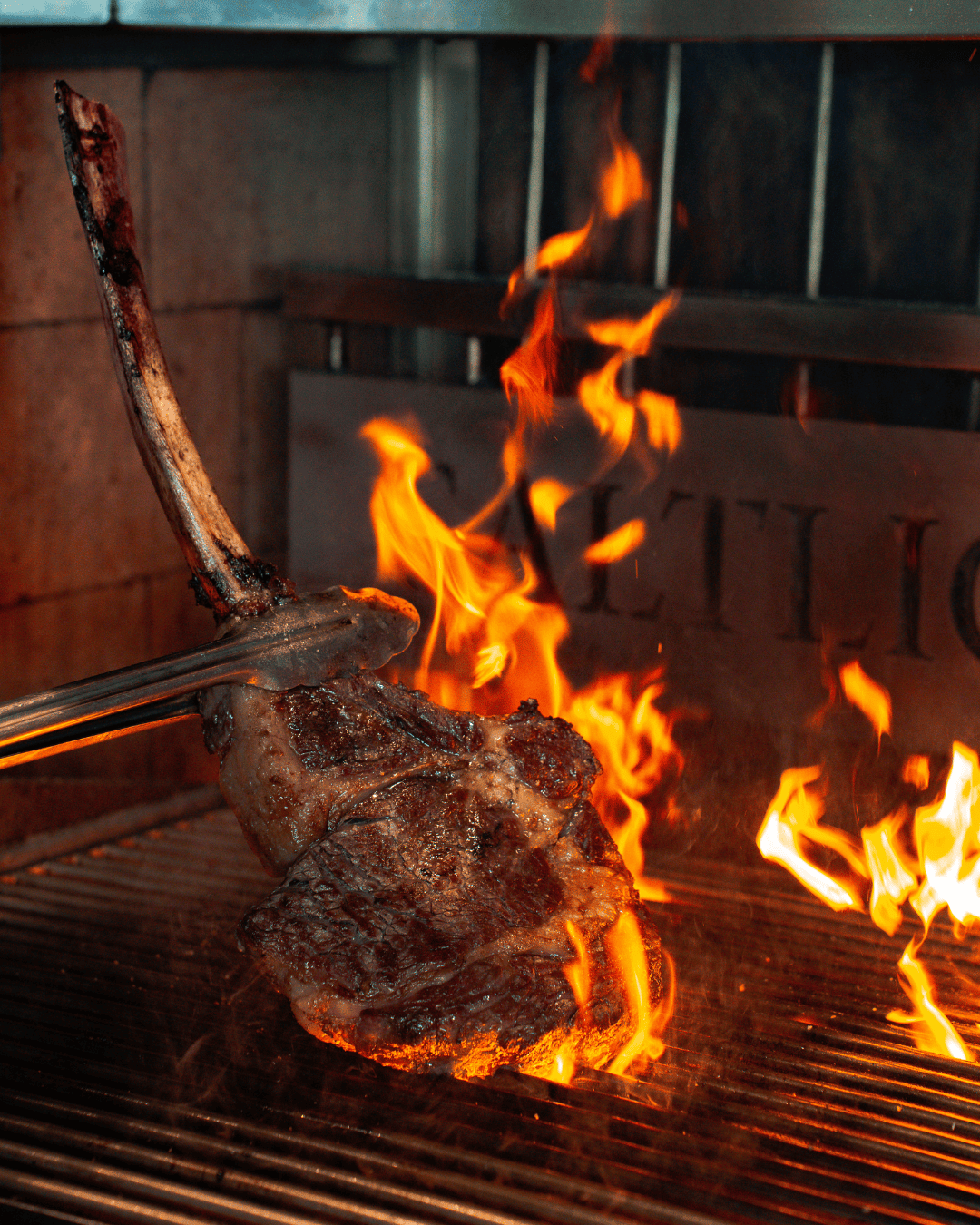
Why Woodfire Cooking Changes Flavour
Discover why woodfire cooking changes flavour, from smoke chemistry to heat behaviour. An in-depth look at how fire shapes taste, texture, and aroma.
Woodfire cooking has been used for centuries, yet its appeal remains deeply modern. At SALTLICK, woodfire is not treated as a gimmick or visual flourish, but as a deliberate cooking method that fundamentally alters flavour, aroma, and texture. Understanding why woodfire cooking tastes different begins with understanding how fire behaves and how ingredients respond to it.
Fire Is Not Just Heat, It’s an Ingredient
When cooking over woodfire, the fuel itself becomes part of the dish. Different woods release different aromatic compounds as they burn, subtly influencing flavour, and this principle is central to how SALTLICK approaches its woodfire cooking philosophy.
As wood combusts, it produces smoke rich in phenols, aldehydes, and organic acids. These compounds settle on the surface of food, creating layers of aroma that simply cannot be replicated through artificial smoke or seasoning.
This interaction between flame and food is why woodfire cooking produces flavours that feel deeper, warmer, and more rounded than other methods, particularly when practiced carefully rather than aggressively.
Smoke Creates Aroma Before Taste
Flavour is largely aroma, and woodfire cooking excels at enhancing aroma long before food reaches the palate. At SALTLICK, this is especially evident when meat first meets the grill, as aromatic smoke binds to natural fats on the surface.
Fat acts as a flavour carrier, absorbing smoke compounds and releasing them gradually as the food is eaten. This is why wood-fired food often tastes fuller and more lingering. SALTLICK’s approach ensures smoke is present but restrained, enough to enhance the dish, never enough to overpower it.
The result is flavour that unfolds slowly, rather than striking all at once.
Radiant Heat Changes Texture
Woodfire cooking exposes food to intense radiant heat rather than uniform convection. This distinction matters. The grill radiates heat unevenly, creating zones that allow chefs to control how proteins sear, rest, and finish.
This uneven heat promotes the Maillard reaction, the chemical process responsible for browning, at a faster and more complex rate. As a result, the surface of a steak cooked at SALTLICK develops a deeply savoury crust while the interior remains juicy and tender.
Gas grills often struggle to achieve this balance without drying food, whereas woodfire naturally encourages contrast between exterior and interior textures.
Woodfire Encourages Simplicity
One of the most important effects of woodfire cooking is how it shapes decision-making. At SALTLICK, the presence of fire encourages restraint rather than excess.
Because woodfire enhances natural flavour, there is less need for heavy marinades, sauces, or seasoning. Ingredients must stand on their own, supported rather than disguised by fire. This approach aligns with SALTLICK’s broader philosophy of letting quality produce speak clearly.
In this way, woodfire cooking isn’t just about taste, it’s about discipline.
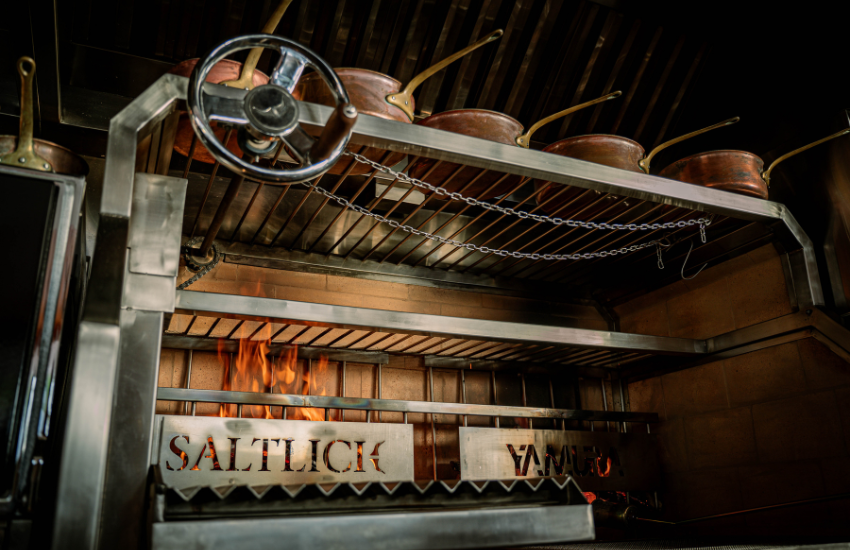
Live Fire Creates Natural Timing
Unlike fixed-temperature ovens or flat-top grills, woodfire requires constant attention. Flames rise and fall, embers shift, and airflow changes throughout service.
Timing becomes intuitive rather than mechanical. Cooks read colour, sound, and aroma instead of relying solely on timers. This attentiveness results in food that feels alive and responsive, rather than processed.
That sense of immediacy is often felt by guests dining at SALTLICK, even if they can’t quite articulate why the food tastes more engaging.
The Role of Fat in Woodfire Cooking
Fat behaves differently over woodfire than it does on controlled heat sources. As fat renders, it drips onto embers, vaporises, and rises back toward the food as aromatic smoke.
Rather than being a problem to manage, dripping fat becomes part of the flavour-building process. When handled properly, it adds savoury depth without bitterness. The key, practiced carefully at SALTLICK, lies in managing distance from flame and controlling airflow.
This interaction simply doesn’t occur with electric or gas cooking in the same way.
Why Woodfire Feels More ‘Honest’
Many diners describe wood-fired food as more honest or grounded. At SALTLICK, this perception is linked to the transparency of the cooking process.
There is no hiding behind technology. Fire rewards attention and punishes carelessness. This honesty carries through to the plate, producing flavours that feel straightforward yet nuanced, robust without being heavy.
Woodfire cooking at SALTLICK reflects a belief that complexity comes from process, not embellishment.
Seasonal Sensitivity
Woodfire cooking responds naturally to seasonal changes. Ambient temperature, humidity, and airflow all influence how fire behaves. At SALTLICK, these subtle shifts inform daily adjustments, ensuring consistency without rigidity.
This sensitivity to environment reinforces the idea that woodfire cooking is rooted in time and place. It is not static, and neither is flavour. Each service carries its own character, shaped by conditions beyond the kitchen.
Experiencing Woodfire Dining at SALTLICK
While the science behind woodfire cooking explains much, its true impact is best understood through experience. Dining at SALTLICK offers a clear expression of how fire transforms ingredients without dominating them.
The flavours feel layered rather than loud, shaped by heat, smoke, and time working together. Woodfire cooking at SALTLICK isn’t about nostalgia, it’s about precision through primal means.
Frequently Asked Question
Does woodfire cooking always taste smoky?
No. Smoke is controlled and subtle, designed to enhance natural flavour rather than overwhelm it.
Is woodfire cooking healthier?
Woodfire cooking allows fats to render naturally and often requires less added oil, a principle followed carefully at SALTLICK.
Why does wood-fired meat taste richer?
The combination of radiant heat, smoke interaction, and fat vaporisation creates deeper savoury flavours, as practiced at SALTLICK.
Is woodfire harder to cook consistently?
It requires more skill and attention, which is why experienced fire management is central to the kitchen at SALTLICK.
Reserve your table via the links below and enjoy Bali’s best dry-aged steaks.
FOLLOW US:
Stay updated on our latest news, special events, and exclusive offers by following us on social media.
Connect with us on Instagram and stay closer to SALTLICK.
