

From Dry Ageing to Service
To many diners, a steakhouse experience appears effortless. A perfectly cooked steak arrives at the table with a crisp crust, a warm centre and carefully balanced sides, often accompanied by a well-selected wine or cocktail. Yet behind that simplicity lies an enormous amount of preparation, coordination and technical discipline.
Modern steak kitchens operate with a unique balance of craftsmanship and precision. Unlike kitchens that rely heavily on sauces or complex assembly, steak-focused restaurants depend on the quality of their ingredients, the management of heat and the consistency of execution.
Every stage matters: sourcing the beef, ageing it correctly, preparing the cuts, managing the fire and coordinating service during peak hours. What guests experience in the dining room is only the final few minutes of a process that may have begun weeks earlier.
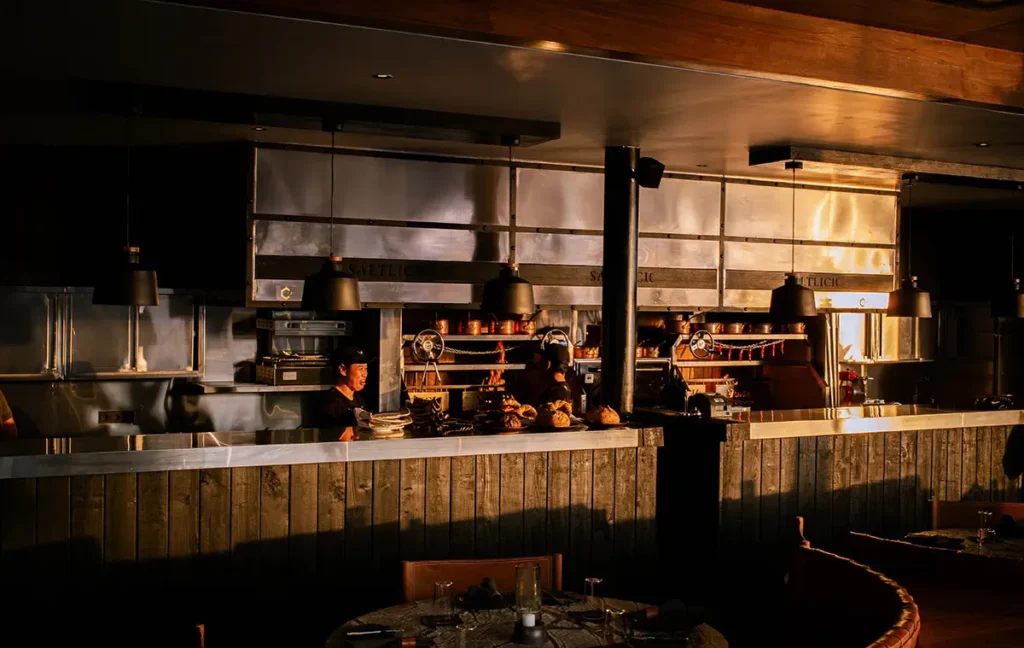
At SALTLICK, where woodfire cooking and premium beef sit at the centre of the menu, the kitchen reflects many of the systems and philosophies that define a modern steakhouse today.
The Foundation Begins with Beef
Before service starts, before the grill is lit and before a single plate leaves the pass, the steak kitchen begins with sourcing.
The quality of beef defines almost everything that follows. A modern steak kitchen spends significant time selecting suppliers, evaluating marbling, understanding cattle breeds and choosing ageing methods that suit the restaurant’s style.
Unlike heavily manipulated dishes, steak leaves little room for disguise. The ingredient itself must stand on its own.
Breed and Marbling
Modern steakhouses often work with breeds known for their flavour and marbling characteristics, including Angus, Wagyu and carefully managed crossbreeds.
Marbling, the intramuscular fat running through the meat, plays a major role in tenderness and flavour. As the steak cooks, the fat slowly renders, creating richness and moisture within the meat itself.
Consistency Matters
Professional steak kitchens require consistency above all else. Cuts must arrive with predictable thickness, fat content and structure so that the grill team can cook them accurately night after night.
At SALTLICK, the emphasis on premium beef and careful sourcing reflects this broader philosophy: quality ingredients simplify the cooking process because less intervention is needed later.
Dry Ageing and Preparation
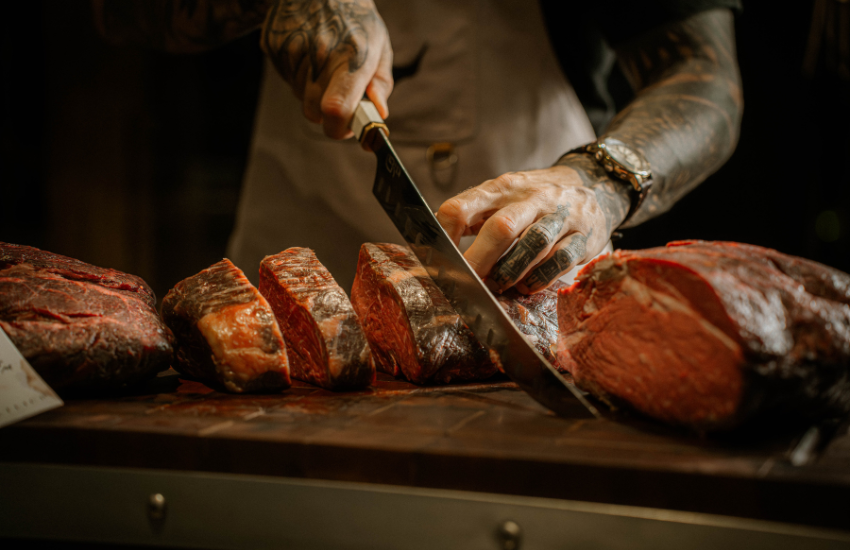
One of the defining features of many modern steak kitchens is in-house ageing.
Dry ageing allows beef to mature under controlled humidity and temperature over several weeks. During this time:
- moisture slowly evaporates
- flavour becomes more concentrated
- enzymes naturally tenderise the meat
The process requires precision and patience. Conditions must remain stable to ensure the beef ages safely and evenly.
Why Dry Ageing Matters
Dry-aged beef develops deeper flavour, often described as nutty, savoury or more intensely “beefy” than fresh cuts.
For modern steak kitchens, dry ageing is both technical and philosophical. It reflects a commitment to time, restraint and ingredient quality rather than speed.
At SALTLICK, dry-aged cuts form an important part of the menu, particularly for larger sharing steaks designed to showcase the depth of flavour that ageing creates.
Understanding the Muscle
Each cut behaves differently over heat.
A ribeye contains heavy marbling and responds differently to fire than a lean tenderloin. Striploin requires a different balance of heat and resting than Wagyu, which contains far more fat.
Understanding these characteristics is part of what separates a dedicated steak kitchen from a more general restaurant operation.
At SALTLICK, the preparation of each cut reflects careful attention to how the beef will ultimately cook over flame.
Fire Management Is Everything
Perhaps the defining feature of a modern steak kitchen is heat control.
Cooking steak properly is not simply about placing meat on a grill. It involves understanding fire behaviour, grill temperatures, airflow and timing.
The Role of Woodfire
Many premium steakhouses now favour woodfire or charcoal cooking because it creates:
- intense direct heat
- natural smoke
- deep caramelisation
Woodfire cooking also introduces complexity. Unlike gas grills, fire constantly changes. Heat zones shift as wood burns and embers move.
Managing this environment requires constant adjustment from the grill team.
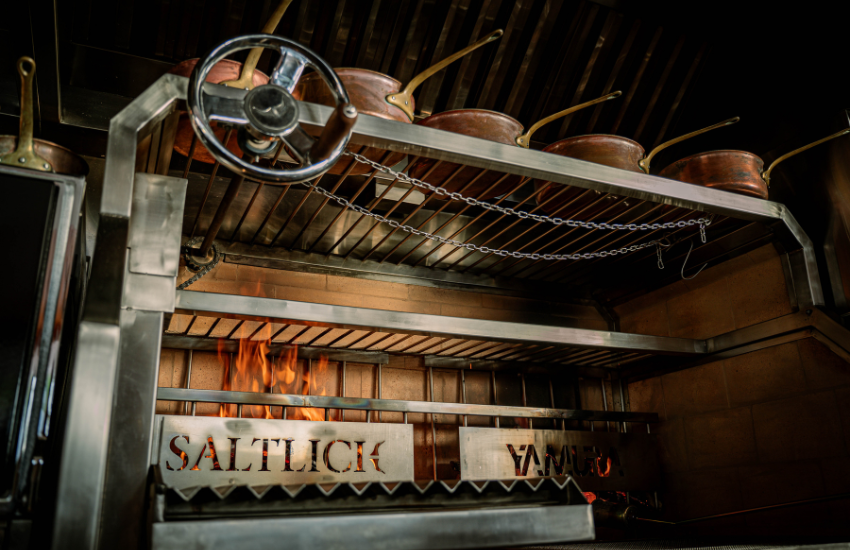
At SALTLICK, woodfire cooking forms the heart of the kitchen. Steaks are cooked over live heat, allowing smoke and flame to enhance the natural flavour of the beef without overwhelming it.fire cooking and understated approach to hospitality work together naturally rather than competing for attention.
Timing During Service
Service in a steak kitchen is highly coordinated.
Unlike some restaurant styles where dishes can sit briefly before serving, steak must often leave the kitchen immediately after resting. Timing therefore becomes critical.
Coordinating the Grill
The kitchen must constantly manage:
- different cooking temperatures
- varying steak thicknesses
- timing across multiple tables
- resting periods
- side dish preparation
A single table may contain:
- medium rare ribeye
- medium striploin
- seafood sides
- sauces
- vegetables
All of these elements must arrive together at the correct temperature.
This coordination becomes especially demanding during busy evening service when dozens of steaks may be cooking simultaneously.
Resting: The Most Overlooked Step
One of the most important yet least visible parts of steak cooking is resting.
After leaving the grill, steak must rest before slicing. This allows juices to redistribute through the meat rather than spilling immediately onto the plate.
Why Resting Matters
Without resting:
- moisture escapes too quickly
- texture becomes firmer
- flavour distribution weakens
The thicker the cut, the more important resting becomes.
Modern steak kitchens treat resting as part of the cooking process itself rather than an afterthought. Timing the rest correctly is essential for consistency.
Sauces and Sides in Modern Steakhouses
While steak remains the centrepiece, modern steak kitchens increasingly approach sauces and sides with the same level of attention as the meat itself.
The role of accompaniments is not to dominate the steak but to balance it.
Simplicity Over Excess
Modern steakhouse cooking often avoids overly heavy garnishes. Instead, the focus tends to remain on:
- acidity
- freshness
- texture contrast
Grilled vegetables, crisp salads and carefully prepared sauces provide balance to richer cuts.
At SALTLICK, side dishes and sauces are designed to complement the flavour of woodfire beef rather than compete with it.
The Role of the Pass
In professional kitchens, the “pass” acts as the final checkpoint before dishes leave the kitchen.
Here, chefs inspect:
- cooking temperature
- slicing consistency
- presentation
- seasoning
- timing
Steak kitchens rely heavily on this final stage because small errors become immediately visible to the diner.
Unlike highly garnished cuisine, steak is exposed and straightforward. There is nowhere to hide inconsistency.
Atmosphere Behind the Kitchen
Despite the precision involved, the atmosphere inside a modern steak kitchen is often surprisingly calm.
The best kitchens operate through rhythm and discipline rather than chaos. Communication remains constant but controlled.
The grill team focuses on timing and heat, while the pass coordinates pacing across the dining room.
During service, every movement matters:
- steaks rotated at the right moment
- resting timed correctly
- plates finished cleanly
- orders communicated precisely
This structure allows the kitchen to maintain consistency even during busy periods.
Frequently Asked Question
What makes a modern steak kitchen different?
Modern steak kitchens focus heavily on sourcing, ageing, butchery and fire management while maintaining consistent cooking standards during service.
Why do steakhouses dry-age beef?
Dry ageing improves tenderness and concentrates flavour by allowing moisture to evaporate and enzymes to break down muscle fibres over time.
Why is woodfire cooking popular in steakhouses?
Woodfire creates intense heat, natural smoke and deep caramelisation that enhance the flavour of steak.
What does resting a steak do?
Resting allows juices to redistribute throughout the meat, improving both tenderness and flavour.
Where can you experience modern steakhouse dining in Bali?
Restaurants such as SALTLICK in Seminyak specialise in woodfire steak cooking, dry-aged beef and ingredient-led steakhouse dining.
Reserve your table via the links below and enjoy Bali’s best dry-aged steaks.
FOLLOW US:
Stay updated on our latest news, special events, and exclusive offers by following us on social media.
Connect with us on Instagram and stay closer to SALTLICK.
