

A Closer Look at Taste, Texture, and Cooking Methods
Cooking steak over live fire is one of the oldest and most respected culinary traditions. Long before modern ovens or controlled kitchen equipment, meat was prepared over glowing embers and open flames. Today, many chefs still consider fire-based cooking the most honest way to prepare great beef.
Two methods are often discussed when it comes to steak: fire-grilling and charcoal grilling. While the terms are sometimes used interchangeably, they describe slightly different approaches to cooking over natural fuel.
Both methods rely on intense heat, but they differ in how that heat is produced and how it interacts with the meat. Understanding these differences helps explain why certain steaks develop deeper smoke, stronger char, or a cleaner flavour profile.
At restaurants such as SALTLICK, where woodfire cooking is central to the kitchen philosophy, the choice of fuel and fire management plays a key role in how each steak is prepared.
The Foundations of Cooking Steak Over Fire
Before comparing fire and charcoal directly, it helps to understand what happens when steak meets intense heat.
When beef is exposed to very high temperatures, several important processes occur:
- Maillard reaction – browning that produces savoury flavour compounds
- Fat rendering – melting fat enriches texture and juiciness
- Caramelisation – natural sugars in the meat develop sweetness
- Smoke absorption – vapours from the fuel create aroma
These reactions are what make steak cooked over live fire so distinctive.
At SALTLICK, the kitchen focuses on harnessing high heat and natural fire to develop these reactions fully. Rather than relying on heavy seasoning or sauces, the goal is to allow the flavour of the beef and the character of the fire to define the dish.
What Is Fire-Grilled Steak?
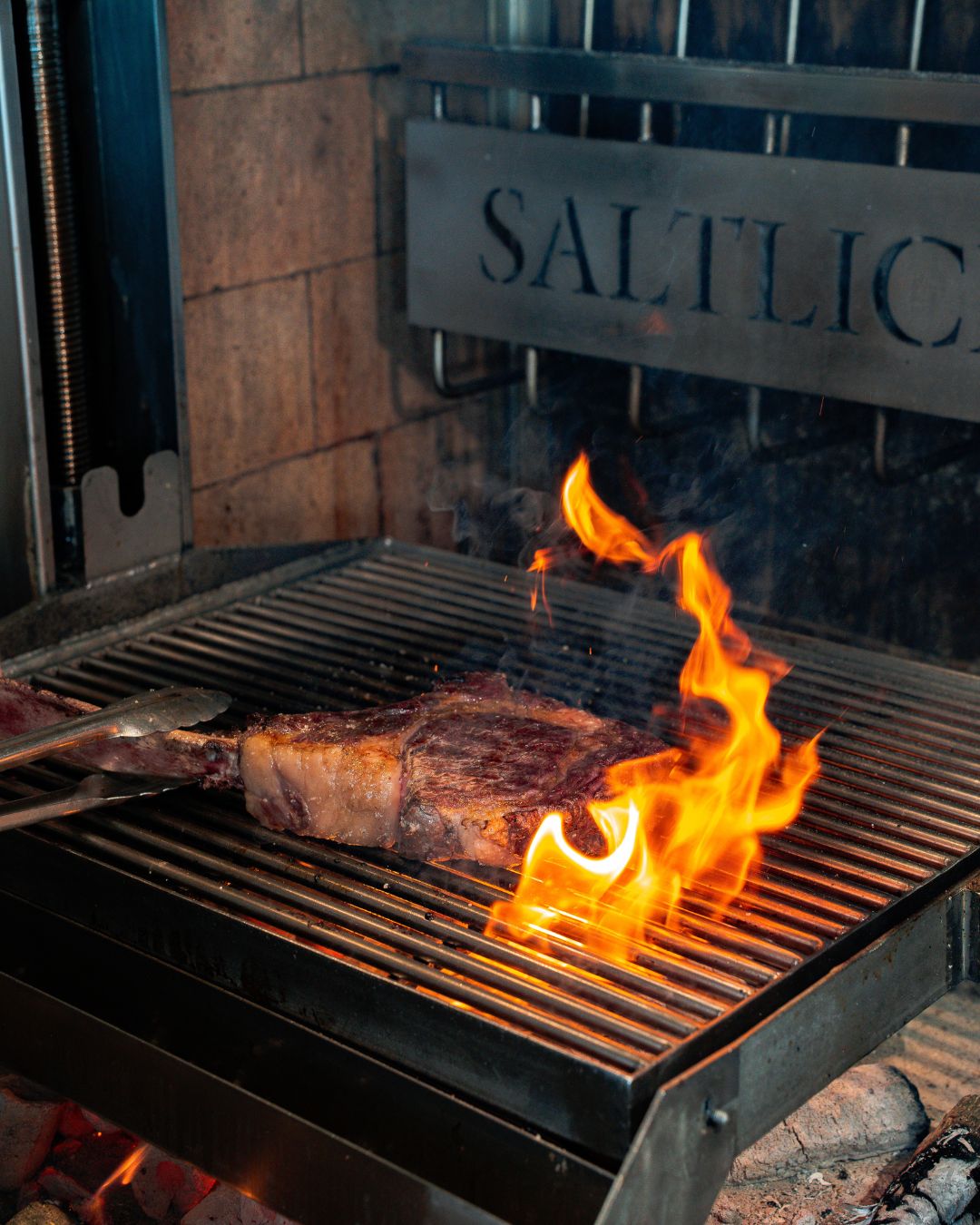
Fire-grilled steak is cooked over active wood flames rather than only embers.
In this style of cooking, wood logs burn directly beneath or beside the grill, creating flames, smoke and glowing embers simultaneously.
Characteristics of Fire-Grilling
Fire-grilling usually produces:
- More pronounced smoke aromas
- Occasional contact with open flame
- A mix of intense and moderate heat zones
- A slightly rustic char on the meat
Because wood fires burn dynamically, the cook must actively manage the grill, shifting the steak, controlling the fire and adjusting cooking zones.
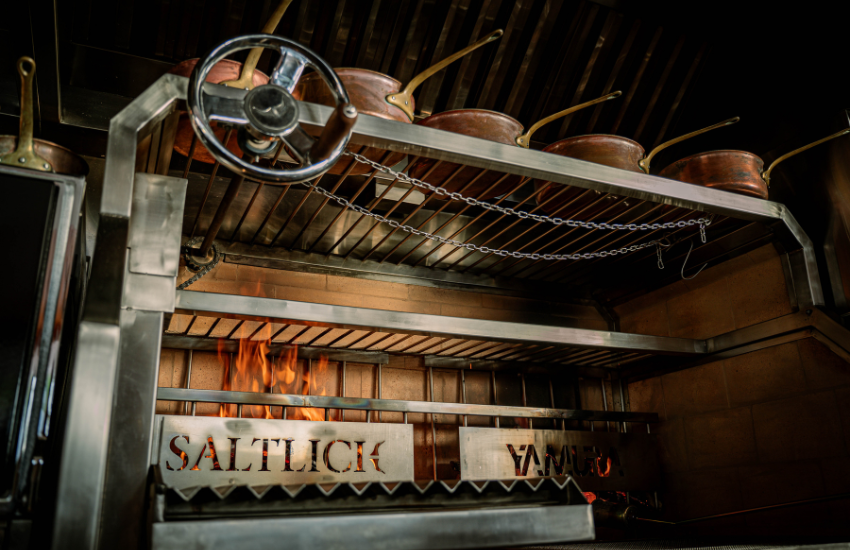
At SALTLICK, this method is part of the cooking identity. The open woodfire grill allows the kitchen team to control flame, embers and airflow, creating a style of steak that reflects traditional fire cooking rather than purely mechanical grilling
Flavour Profile
Fire-grilling tends to produce deep, layered flavour.
The smoke from burning wood combines with fat drippings that fall into the fire, creating aromatic vapours that rise back toward the meat. This interaction between meat, fat and flame produces the complex aromas often associated with wood-fired steak.
What Is Charcoal-Grilled Steak?
Charcoal grilling relies on burnt wood that has been reduced to carbon-rich embers. Rather than active flames, the main heat source is the radiant heat from glowing charcoal.
This method is extremely popular because charcoal burns evenly and provides consistent cooking temperatures.
Characteristics of Charcoal Grilling
Charcoal grilling typically provides:
- Stable, even heat
- Less flame contact with the meat
- A controlled sear
- Predictable cooking times
Because charcoal produces steady heat, steaks can remain in the same position for longer without constant adjustment.
Flavour Profile
Charcoal produces a clean, balanced smokiness, usually milder than woodfire smoke.
The flavour tends to emphasise the natural taste of the beef rather than the aroma of the fuel.
Heat Dynamics
One of the biggest differences between fire and charcoal grilling lies in how heat behaves.
Wood fire produces fluctuating heat because logs burn unevenly. Flames rise, embers shift, and temperatures change as the wood burns.
Charcoal, on the other hand, burns at a more stable temperature once fully ignited.
This difference affects how steaks are cooked.
At SALTLICK, chefs constantly manage the fire, moving steaks between hotter and cooler sections of the grill. This creates precise control while still preserving the character of open flame cooking.
Smoke Intensity
Wood fires naturally produce more smoke than charcoal because fresh wood continues to combust while cooking.
Charcoal, having already undergone much of its combustion during production, releases less smoke during grilling.
This results in two different flavour experiences:
- Fire-grilled steaks – deeper smoky aromas
- Charcoal-grilled steaks – lighter smoke influence
At SALTLICK, the woodfire grill produces subtle layers of smoke that enhance the beef without overwhelming it, giving each steak a slightly different aromatic profile.
Flame Interaction — Why Fire Cooking at SALTLICK Creates Unique Char
When fat melts from the steak and drips into a wood fire, it can briefly ignite, creating small bursts of flame.
These flare-ups contribute to:
- Additional caramelisation
- Slightly deeper char
- Extra smoky aromas
Charcoal grilling rarely produces the same level of flame interaction because the fuel burns more steadily.
At SALTLICK, chefs use this natural interaction between flame and fat to develop the characteristic crust on each steak while carefully controlling flare-ups to prevent burning
Why High Heat Matters — A Principle at SALTLICK
Regardless of the fuel used, great steak depends on very high heat.
High temperatures allow the steak to:
- Develop a rich crust through the Maillard reaction
- Cook quickly while preserving juiciness inside
Without intense heat, steak tends to steam rather than sear, resulting in a grey surface and weaker flavour.
At SALTLICK, the woodfire grill reaches the temperatures necessary to create that deeply caramelised exterior while keeping the interior tender.
Fat, Fire and Aroma
One of the most distinctive elements of live-fire cooking is the interaction between fat and fire.
As the steak cooks, fat melts and drips onto the hot embers below. This produces aromatic vapours that rise back toward the meat.
This process creates the unmistakable scent of steak on a woodfire grill.
At SALTLICK, this natural interaction between meat, flame and smoke is part of the dining experience itself, contributing both flavour and atmosphere to the restaurant.
Choosing Between Fire and Charcoal
Both fire-grilling and charcoal grilling produce excellent steak, but they offer slightly different results.
Fire-grilling suits diners who enjoy:
- Deeper smoke aromas
- Traditional open-fire cooking
- A more rustic flavour profile
Charcoal grilling appeals to those who prefer:
- Controlled cooking temperatures
- Subtle smokiness
- Consistency across grills
At SALTLICK, the choice to cook over woodfire reflects a philosophy that values natural flavour, high heat and the timeless appeal of cooking with real flame.
Frequently Asked Question
Is fire-grilled steak better than charcoal steak?
Neither is inherently better. Fire-grilling often produces stronger smoky flavours, while charcoal grilling offers more controlled heat.
Why do restaurants cook steak over wood fire?
Woodfire creates high heat and natural smoke, both of which enhance flavour and develop a deeper crust on the meat.
Does charcoal add flavour to steak?
Yes. Charcoal produces a subtle smokiness, although it is generally milder than woodfire smoke.
Why does steak taste better over fire?
The combination of high heat, smoke and fat interaction creates complex aromas and deeper caramelisation.
Where can you experience woodfire steak in Bali?
Restaurants such as SALTLICK in Seminyak specialise in woodfire cooking, where steaks are grilled over live flame to emphasise natural flavour.
Reserve your table via the links below and enjoy Bali’s best dry-aged steaks.
FOLLOW US:
Stay updated on our latest news, special events, and exclusive offers by following us on social media.
Connect with us on Instagram and stay closer to SALTLICK.
